
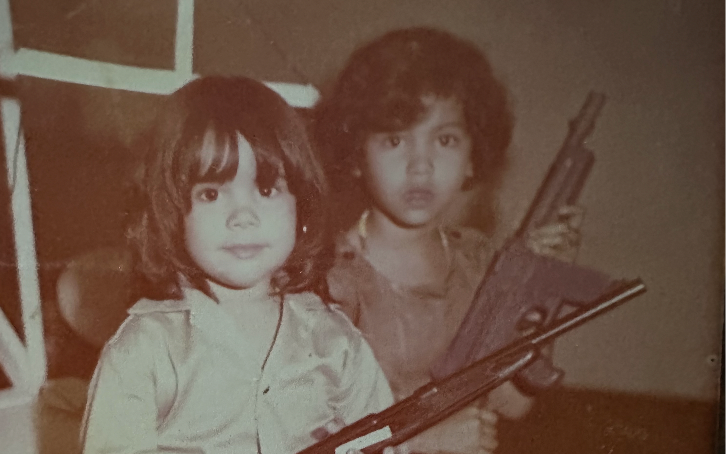

I recently found a childhood photo taken in Cuba, my homeland. In it, I’m sitting beside another young girl. We are about 5-years-old, holding rifles bigger than we are as part of a school play, our tiny fingers carefully positioned near the trigger.
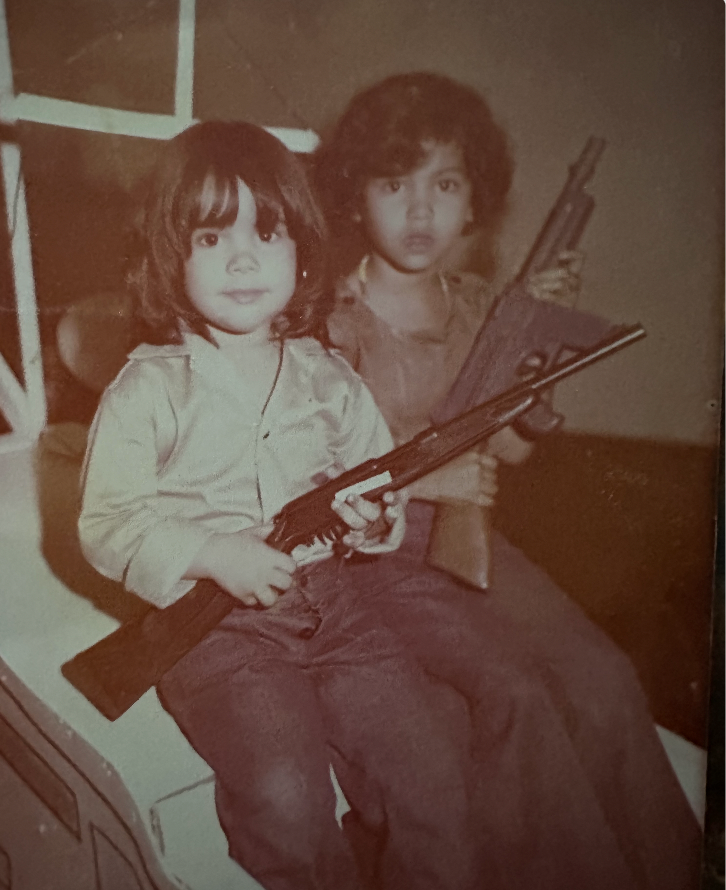
Photographs like this were not unusual in Cuba. Authoritarian regimes see children as future servants of the state and often claim a greater role in shaping them than their families do. Generations of Cuban children grew up under the slogan “Estudio, Trabajo, Fusil”—“Study, Work, Rifle”—which taught that academic achievement, labor, and military readiness were duties owed to the revolution.
Shortly after this photo was taken, we fled Cuba alongside tens of thousands of others during the Mariel Boatlift on June 17, 1980—46 years ago next week. My parents did not want their daughter growing up under a regime that demanded loyalty to the revolution above all else.
Before we fled, I recall adults speaking in hushed tones; family members carefully discussing plans they did not want others to hear. Like thousands of Cuban families seeking freedom, we were considered traitors and branded “gusanos”—worms—by supporters of the regime. I remember my mother and grandmother breaking glass bottles in the backyard so they could use the jagged edges to defend themselves if we were attacked on the way out. That is how terrifying those final days felt.
Today, the world is finally getting a glimpse of the reality Cubans like myself have been describing for decades.
This reality contradicts the lie sold by the Cuban regime—one that insists its communist revolution brought equality and protected ordinary people from “the failures of capitalism.” Many Cubans will tell you the system has never felt like a shared sacrifice. While ordinary Cubans have spent their lives waiting in lines for food, living through blackouts, and wondering how they would provide for their families, those close to the regime are often insulated from the hardships imposed on everyone else.
Not much has changed in over six decades, but today. Cuba is facing one of the worst crises in its recent history. Fuel shortages, prolonged blackouts, water scarcity, and medicine shortages have become part of daily life. Streets that once bustled with activity now feel eerily empty. Businesses sit shuttered. Trash accumulates as public services deteriorate. Many Cubans rely on remittances from family members abroad simply to survive. This isn’t equality; it’s inhumanity.
The shortages are visible. But the fear that plagues Cubans is harder to see. Cubans know there are things they can’t talk about openly. Independent journalists are threatened, and dissidents are harassed. People understand that criticizing the government can bring trouble for them and their families.
A government confident in its success does not fear open discussion. It shouldn’t need censorship or threats to stay in power. But the same system that filled my childhood with revolutionary symbolism decades ago still uses the same tactics to hold on to power today.
As a mother, I often think about the children growing up in Cuba now, including members of my own family. Like generations before them, they are being taught what to think about the revolution, and are being denied stability, opportunity, and the freedom to imagine a future beyond it.
And all the while, Cuba’s education system can’t provide even the most basic conditions for learning. Imagine trying to study, complete homework, or simply be a child when basic services such as electricity cannot be counted on from one day to the next.
Every society depends on its young people believing that tomorrow can be better than today. Yet one of the clearest signs of Cuba’s failure is how many young Cubans dream not of building their future in Cuba, but of leaving it. No child should have to leave their homeland to find freedom.
As the United States debates how to respond to Cuba’s worsening crisis, humanitarian assistance may help alleviate immediate suffering, but it cannot solve the underlying problem. Food shipments cannot create freedom. Emergency aid cannot replace economic opportunity, political liberty, free expression, and accountable government.
The Cuban people have been warning the world about that reality for decades. It is time we listened.
Judy Pino is a National Spokeswoman for Independent Women.